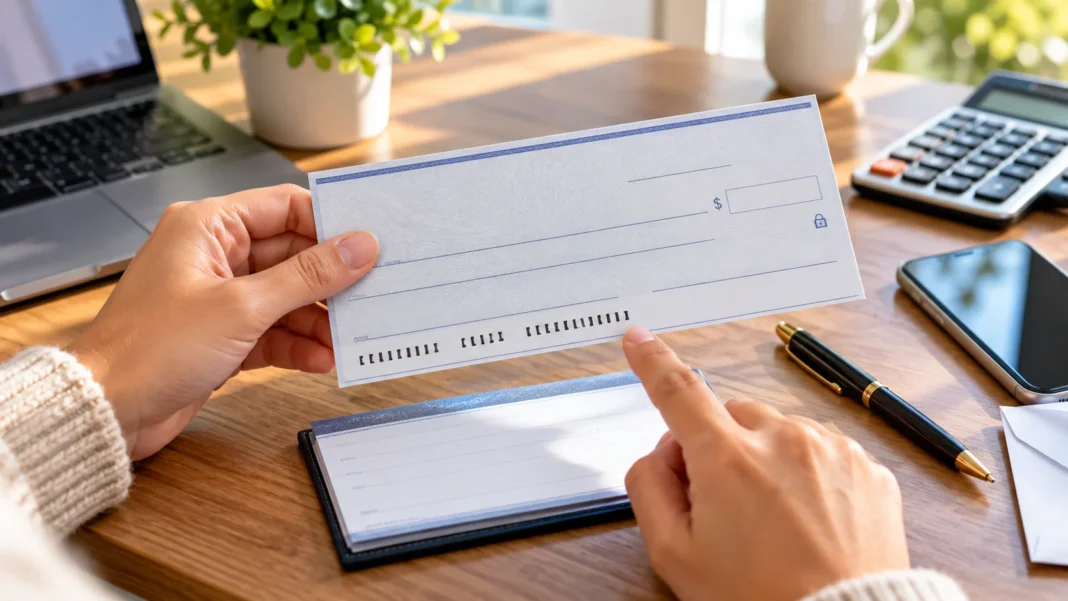

Understanding the routing and account number on a check is important when setting up direct deposits, transferring money, or making electronic payments. These numbers identify your financial institution and the specific bank account associated with your checks. Although they usually appear together at the bottom of a personal check, they serve different purposes in banking transactions.
Many people confuse routing numbers with account numbers because both contain several digits and appear in the same area. However, each number provides different information to payment processing systems. Knowing where to find them can help you complete banking forms accurately and avoid unnecessary payment delays.
This guide explains where to find the routing number and account number on a check, how they work, and why they are important. You will also learn how to distinguish these numbers from the check number, find them without a physical check, and protect your banking information.
What Is a Routing Number on a Check?
A routing number is a nine-digit number used to identify a financial institution within the United States banking system. It is also called an ABA routing number or routing transit number. Banks and payment processors use this information to direct qualifying financial transactions to the correct institution.
Routing numbers are commonly used for direct deposits, electronic bill payments, Automated Clearing House transfers, and check processing. When you provide your routing number, you identify the bank or credit union involved in the transaction. However, the routing number alone does not identify your individual checking or savings account.
Some financial institutions use multiple routing numbers depending on location, account history, or transaction type. The routing number used for domestic wire transfers may also differ from the one printed on a check. Verifying the correct number with your bank helps prevent payment processing problems and delays.
What Is an Account Number on a Check?
An account number is a unique identifier assigned to a specific account at a bank or credit union. Unlike a routing number, which identifies the financial institution, the account number identifies the account involved in a transaction. Banks use this combination to process deposits, withdrawals, and electronic payments accurately.
The length of an account number varies depending on the financial institution. Some account numbers contain eight digits, while others may have ten, twelve, or more. There is no single universal account number length used by every bank in the United States.
Your checking account number usually appears near the bottom of a personal check, alongside the routing and check numbers. It may also be available through your bank’s mobile application, online banking portal, or official account documents. Because account numbers are sensitive financial information, they should only be shared through trusted and secure channels.
Where Is the Routing Number Located on a Check?
On most standard U.S. personal checks, the routing number appears as the first group of digits along the bottom-left edge. It contains exactly nine digits and is printed using special magnetic ink character recognition formatting. This design helps banks and automated processing systems identify the financial institution associated with the check.
The routing number is generally positioned before the checking account number and check number. Special symbols may appear around it as part of the magnetic ink character recognition line. Although the symbols can look unfamiliar, they help processing equipment distinguish one category of banking information from another.
While this layout is common, check designs may differ depending on the issuing bank. Some checks place the check number in a different position along the bottom row. If you are uncertain about which digits represent your routing number, confirm the information through your financial institution before using it.
Where Is the Account Number Located on a Check?
The checking account number generally appears at the bottom of the check, immediately after the nine-digit routing number. It is usually the middle group of digits in the magnetic ink character recognition line. However, the exact arrangement may vary because different banks use different check layouts.
Account numbers do not have a fixed number of digits across all financial institutions. This can make them more difficult to recognise than routing numbers, which always contain nine digits in the United States. Looking at the separators and number groups printed on the check can help identify the correct information.
If you cannot confidently identify the account number, avoid guessing based on its length or position alone. Instead, compare the printed information with your official banking records. Entering the wrong account number when setting up payments or deposits may result in processing failures or funds being directed incorrectly.
How to Identify the Numbers at the Bottom of a Check
The bottom of a personal check normally contains three important pieces of banking information: the routing number, account number, and check number. These digits are printed along a specially formatted line designed for automated check processing. Each group serves a specific purpose and should not be confused with the others.
The routing number is usually the first nine-digit group on the left, followed by the account number. The check number often appears toward the right side of the bottom line, although some banks arrange the information differently. The same check number may also be printed near the upper-right corner of the check.
To identify the correct numbers, begin by locating the nine-digit routing number and then examine the remaining groups. Compare the account number with your banking records when possible. Because check layouts differ, official bank confirmation is more reliable than assuming every check follows exactly the same arrangement.
Routing Number vs. Account Number: Key Differences
The main difference between a routing number and an account number is what each one identifies. A routing number identifies the financial institution responsible for processing a transaction. An account number identifies the individual checking or savings account where funds should be deposited or withdrawn.
Routing numbers in the United States contain nine digits, while account numbers vary in length according to the bank. Multiple customers at the same financial institution may share a routing number, but their individual account numbers are different. A bank may also maintain more than one routing number for particular regions or services.
Both numbers are commonly required for direct deposits, ACH transfers, and certain automatic payments. Payment systems use them together to identify the appropriate destination or source of funds. Providing accurate information is important because incorrect routing or account numbers can cause delays, rejected payments, or other banking problems.
What Is the Check Number and Where Is It Located?
A check number is a reference number used to distinguish individual checks issued from the same checking account. It helps account holders and financial institutions track payments and maintain accurate transaction records. Unlike routing and account numbers, it identifies a specific check rather than a financial institution or account.
The check number is commonly printed in the upper-right corner of a personal check. It may also appear as the final group of digits along the bottom edge. The placement depends on the bank’s check design, but both printed references usually represent the same individual check.
Check numbers are especially useful when reviewing bank statements or reconciling checking account records. They allow account holders to identify which checks have cleared and which payments remain outstanding. However, check numbers are generally not required when setting up ACH direct deposits or ordinary electronic bill payments.
How to Find Your Routing Number Without a Check
You can often find your routing number through your bank’s official website or mobile banking application. Many financial institutions display routing information within account details, direct deposit settings, or help sections. Make sure the number applies to your specific account and intended transaction before using it.
Bank statements and account opening documents may also contain routing information, although the details provided vary by institution. Some banks issue downloadable direct deposit forms showing both routing and account numbers. These documents can be especially helpful when an employer requests verified banking information for payroll purposes.
Another option is to contact your bank directly using an official customer service number or visit a branch. Bank representatives can help confirm the correct routing information. This is particularly important for wire transfers, since a bank may use routing instructions that differ from those printed on personal checks.
How to Find Your Account Number Without a Check
Most banks allow customers to view their account numbers through secure online banking platforms or mobile applications. After signing in, look for sections labelled account details, account information, or direct deposit instructions. Some institutions hide part of the account number until additional identity verification is completed.
Your account number may also appear on official bank statements or account opening documents. However, financial institutions sometimes mask sensitive digits on statements for security reasons. If the full number is unavailable, use the bank’s authorised account information feature rather than attempting to reconstruct missing digits.
If you cannot locate your account number, contact your bank through an official support channel. A representative may provide the number after completing required identity verification. Avoid sharing passwords, security codes, or other authentication details with anyone who contacts you unexpectedly claiming to represent your financial institution.
What Is the MICR Line on a Check?
The MICR line is the row of specially formatted characters printed along the bottom of a check. MICR stands for Magnetic Ink Character Recognition, a technology used in automated check processing. The line typically contains the routing number, account number, and check number in a format that banking equipment can recognise.
MICR characters use a distinctive font and may be printed with magnetic ink to support machine reading. Modern processing systems can also recognise check information through electronic imaging. The purpose is to help financial institutions identify payment details consistently, reducing the need to enter every number manually.
Although the MICR line contains several number groups, their positions can vary with the check design. The routing number is generally the nine-digit group toward the left, with the account number nearby. Understanding this format makes it easier to identify banking information while recognising that unusual layouts may require confirmation from the issuing bank.
Why Are Routing and Account Numbers Important?
Routing and account numbers allow electronic payment systems to identify the correct financial institution and bank account. They are commonly required when setting up direct deposits, automatic bill payments, and certain bank transfers. Providing accurate details helps money move between accounts through the appropriate financial channels.
The routing number directs the transaction to the financial institution, while the account number identifies where the payment should be credited or debited. Both numbers must generally be correct for the transaction to process successfully. An error may cause a rejected payment, processing delay, or funds being sent to an unintended destination.
These numbers are also useful when managing recurring financial obligations, including utility payments and scheduled transfers. However, because they may be used to initiate certain account transactions, they should be handled carefully. Sharing banking information only with verified organisations and through secure systems helps reduce the risk of financial misuse.
How to Use Routing and Account Numbers for Direct Deposit
Direct deposit allows employers and other authorised payers to send money electronically into a bank account. Setting it up usually requires the financial institution’s routing number, the receiving account number, and the account type. Some organisations also ask for the account holder’s name and a bank-issued direct deposit form.
The information is generally entered through an employer’s secure payroll system or another authorised payment setup process. The payer then uses the details to route funds through the applicable electronic payment network. Accurate account information is essential because incorrect numbers can delay deposits or require additional administrative corrections.
Before submitting direct deposit information, verify the details through your bank’s official application or account records. Confirm whether you are using a checking or savings account and whether special routing instructions apply. Protect the information during submission and review account activity after the payment arrangement becomes active.
Are Routing Numbers Different for ACH and Wire Transfers?
ACH transfers and wire transfers are different methods of moving money between financial institutions. ACH transactions are commonly used for direct deposits, bill payments, and recurring transfers. Wire transfers are often used for transactions requiring a separate bank transfer process, with different processing arrangements and potential fees.
Some banks use the same routing number for ACH transactions and domestic wire transfers, while others maintain separate routing numbers. Consequently, the number printed on a personal check may not always be appropriate for a wire transfer. Using the wrong routing information can delay or prevent the intended payment.
International transfers may also require information such as a SWIFT or BIC code, depending on the countries and banks involved. These identifiers serve different purposes from ordinary domestic routing numbers. Before authorising a transfer, confirm the complete payment instructions through official banking channels and verify the recipient’s details carefully.
Is It Safe to Share Your Routing and Account Numbers?
Routing and account numbers are routinely shared with authorised employers, payment processors, and financial institutions for legitimate banking transactions. However, they are sensitive financial details because they help identify an account and may be used in certain payment arrangements. They should therefore be shared only when necessary and with verified recipients.
Fraudsters may attempt to collect banking information through unexpected messages, fraudulent websites, or impersonation attempts. A legitimate-looking request does not automatically mean that the sender can be trusted. Before providing account details, independently confirm the organisation’s identity and use its official secure payment or account setup system.
Regularly reviewing bank statements and enabling transaction alerts can help identify unexpected account activity. If you believe your account information has been exposed or misused, contact your financial institution promptly. Your bank can explain available protections, investigate suspicious transactions, and recommend appropriate steps for securing the account.
Common Mistakes When Reading Numbers on a Check
One common mistake is confusing the check number with the account number because both appear along the bottom of many checks. The check number may also be printed separately in the upper-right corner. Comparing the repeated number with the MICR line can help distinguish it from the account information.
Another mistake is assuming that every bank uses exactly the same check layout. Although the routing number is typically located toward the bottom-left corner, the remaining numbers may appear in a different order. Business checks, special account checks, and certain financial institutions can use layouts that differ from standard personal checks.
People may also accidentally omit leading zeros when entering account numbers into electronic forms. These zeros can be important parts of the actual account identifier. Copying the complete number exactly as provided by the financial institution and checking it before submission helps reduce avoidable payment problems.
How to Verify Routing and Account Numbers Before Making Payments
Verifying routing and account numbers begins with comparing them against information provided directly by your financial institution. Official mobile banking applications, secure account portals, and bank-issued forms can be useful sources. These methods help confirm that the information corresponds to the intended account and transaction type.
Routing numbers can also be checked through recognised banking information services, but account numbers generally require confirmation through the account-holding institution. A routing number lookup may identify a bank without confirming ownership of any individual account. Therefore, verifying the routing number alone does not establish that the complete payment information is correct.
Before initiating a transfer or recurring payment, review the recipient details and account type as well as the numbers themselves. If the transaction involves a significant amount of money, independently confirm the instructions through a trusted communication channel. This extra verification can help reduce errors and fraudulent payment redirection.
Conclusion
The routing and account number on a check serve different but equally important purposes in banking transactions. The routing number identifies the financial institution, while the account number identifies the specific account. On most standard U.S. personal checks, both appear along the bottom edge, with the nine-digit routing number generally positioned first.
Understanding these numbers can make setting up direct deposits, paying bills, and managing electronic transfers easier. It is also important to recognise the separate check number and understand that some banks use different routing instructions for particular transactions. Verifying account information before submitting it helps reduce processing errors and delays.
When handling routing and account numbers, accuracy and security should remain priorities. Use official banking sources to confirm details, share information only with trusted recipients, and monitor financial accounts for unexpected activity. Knowing where these numbers appear and how they work can help you manage everyday banking tasks more confidently.
Frequently Asked Questions (FAQs)
Where is the routing number on a check?
The routing number is usually the first nine-digit group printed along the bottom-left edge of a standard U.S. personal check. It identifies the financial institution responsible for processing the payment.
Where is the account number located on a check?
The account number generally appears at the bottom of a personal check, immediately after the routing number. Its length varies by bank, so verify the correct digits if the check layout is unfamiliar.
Is the routing number the same as the account number?
No, a routing number identifies the bank or credit union, while an account number identifies a specific account. Both numbers are commonly required for direct deposits and electronic payments.
Can I find my routing and account numbers without a check?
Yes, many banks display routing and account numbers through secure mobile applications, online banking portals, or official account documents. You can also contact your financial institution for assistance.
Is it safe to give someone your routing and account number?
These numbers can be shared with verified organisations for legitimate deposits and payments. However, they are sensitive financial information and should only be provided through trusted, secure channels when necessary.