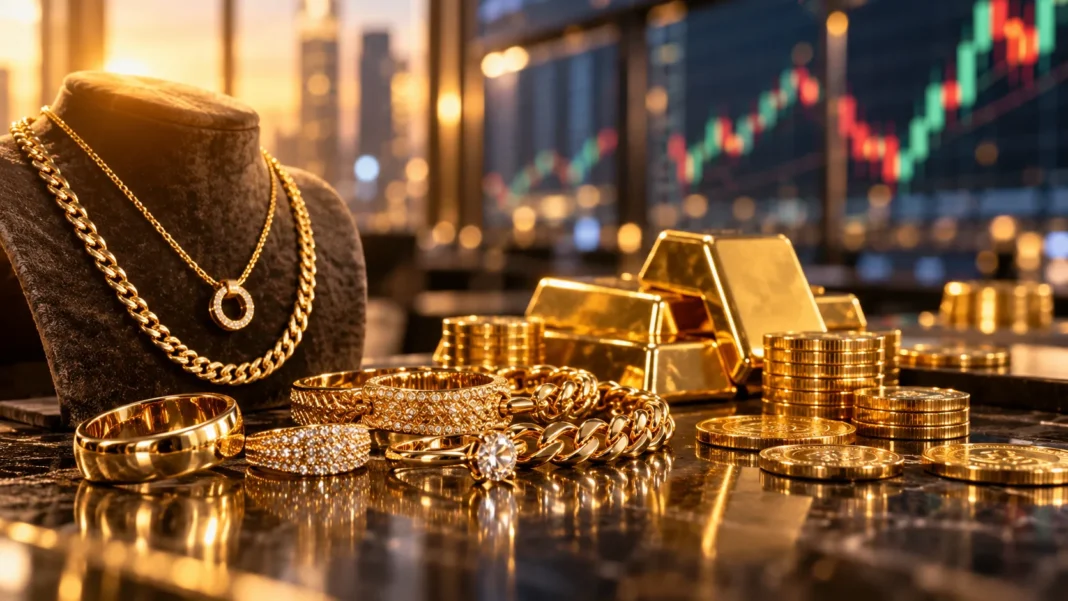

Gold remains one of the world’s most valuable precious metals, widely used in jewelry, investment products, and decorative items. Among the different gold purity levels available, 14K gold is particularly popular because it combines attractive gold content with greater durability than higher-karat alternatives. Understanding its current market value is important when comparing jewelry prices or estimating the value of existing gold items.
The gold price today 14K depends on international gold quotations, currency exchange rates, metal purity, and local market conditions. Unlike pure 24K gold, 14K gold contains a combination of gold and other metals that influence its durability, appearance, and intrinsic value. These differences explain why 14K jewelry is generally priced differently from 18K, 22K, or 24K products.
This guide explores five essential updates about 14K gold prices, including the latest available per-gram rates, international market movements, purity calculations, resale values, and economic trends. It also explains how to calculate the gold content of jewelry and understand additional retail charges. The goal is to make 14K gold pricing easier to understand without relying on unsupported predictions.
Gold Price Today 14K: Latest Market Overview
As of October 18, 2026, the latest available market data indicates that 14K gold has an estimated underlying metal value of approximately $78.10 to $78.35 per gram in the United States. This range reflects recent international gold quotations and common purity calculations. It is an indicative metal value, not a guaranteed retail or resale price.
International gold closed near $4,165.42 per troy ounce on Friday, October 16, 2026. Using that closing quotation and the standard 14K purity fraction of 14/24 gives an estimated metal value of approximately $78.12 per gram. Reported retail-market reference rates may differ slightly because of data timing and purity conventions.
Gold markets are sensitive to financial developments, and quoted prices can change when trading resumes. October 18, 2026, falls on a Sunday, so the latest available weekend figures should not be mistaken for a newly established weekday trading price. Local jewelry stores may also apply additional charges beyond the calculated value of the gold itself.
1. Essential Update: 14K Gold Price Per Gram
The 14K gold price per gram is one of the most commonly used measurements when estimating jewelry value. Many rings, bracelets, necklaces, and other accessories are weighed in grams, making this unit convenient for comparing metal content. The calculated value changes alongside the international price of pure gold.
Based on the October 16, 2026, gold closing price, one gram of 14K gold contains approximately $78.12 worth of gold at the underlying market quotation. This estimate assumes a purity of approximately 58.33%. Actual jewelry prices may be higher because they include manufacturing, design, retail margins, and other expenses.
Understanding the per-gram price is particularly useful when comparing items with different weights. For example, a heavier bracelet generally contains more gold than a lighter one of the same purity. However, gemstones, decorative components, and non-gold materials must be considered when determining actual precious metal weight.
2. Essential Update: 14K Gold Price Per 10 Grams
The price of 10 grams of 14K gold provides another useful reference for comparing jewelry and precious metal values. Some jewelry retailers display prices according to 10-gram increments, while others use grams or traditional regional measurements. The underlying calculation remains based on total weight and gold purity.
Using the indicative rate of approximately $78.12 per gram, 10 grams of 14K gold would contain around $781.20 in pure gold value. This figure represents the estimated precious metal content before additional retail costs or resale deductions. It does not account for gemstones or non-gold components included in the item’s weight.
A 10-gram comparison can help readers understand how gold pricing changes with weight. However, two jewelry pieces with identical weights and purity may still have very different selling prices. Craftsmanship, branding, design complexity, and market conditions can contribute significantly to the final retail amount.
3. Essential Update: 14K Gold Price Per Troy Ounce
International gold prices are commonly quoted per troy ounce, making this measurement important for understanding broader precious metal markets. One troy ounce equals approximately 31.1035 grams. Although 14K jewelry is usually sold by smaller weight measurements, ounce-based calculations can help compare its value with international gold quotations.
At an international gold price of $4,165.42 per troy ounce, one troy ounce of 14K gold alloy has an estimated gold-content value of approximately $2,429.83. This calculation uses the standard 14/24 purity fraction. It assumes that the entire measured weight consists of the stated 14K alloy.
The value of a troy ounce of 14K gold should not be confused with the price of one troy ounce of pure gold. Because 14K contains less gold, its intrinsic metal value is proportionately lower. Understanding this relationship helps prevent incorrect comparisons between jewelry quotations and international investment-grade gold prices.
4. Essential Update: 14K Gold Purity Influences Market Value
Gold purity is one of the most important factors affecting the price of 14K jewelry. The karat system describes the proportion of gold contained in an alloy out of 24 parts. Fourteen-karat gold therefore contains approximately 58.33% gold, with the remaining portion consisting of other metals.
Many 14K jewelry products carry a 585 hallmark, indicating a standardized fineness of 58.5% gold. The small difference between the theoretical 14/24 fraction and this hallmarking convention can produce slightly different calculated values. Buyers and sellers should understand which standard a particular quotation uses.
The additional metals in 14K gold may include copper, silver, zinc, or other alloying materials depending on the product. These metals influence hardness, color, and manufacturing characteristics. Gold purity remains the main factor determining the intrinsic gold value, while craftsmanship and design influence the finished jewelry price.
5. Essential Update: Gold Market Volatility Affects 14K Prices
The international gold market experienced noticeable price fluctuations during October 2026. Gold declined during parts of the month as stronger United States inflation figures increased expectations of higher interest rates. Later movements reflected changes in the dollar’s strength and government bond yields.
These developments affect 14K gold because its underlying value is calculated using the market price of pure gold. When international gold rises, the calculated metal value of 14K gold generally increases. When gold declines, the same jewelry item may have a lower underlying metal value, even though its physical characteristics remain unchanged.
However, retail jewelry prices do not always move immediately or proportionately with international gold quotations. Retailers may consider existing inventory, operating expenses, exchange rates, and local customer demand. Monitoring international market trends provides useful context, but it does not establish the exact price charged by every jewelry store.
14K Gold Rate Comparison: Per Gram, 10 Grams, and Ounce
Comparing 14K gold across different weight measurements helps readers understand how pricing works. The following estimates use the October 16, 2026, international closing price of approximately $4,165.42 per troy ounce and the theoretical 14K purity fraction. All figures represent underlying metal value rather than finished jewelry prices.
| 14K gold weight | Estimated gold-content value |
|---|---|
| 1 gram | $78.12 |
| 5 grams | $390.60 |
| 10 grams | $781.20 |
| 20 grams | $1,562.40 |
| 1 troy ounce of 14K alloy | $2,429.83 |
These estimates are rounded and may differ slightly from quotations using 585 fineness or other market conventions. Taxes, manufacturing charges, and dealer margins are excluded. Actual purchasing and resale amounts depend on the characteristics of the item and the terms offered by the business involved.
Understanding the Difference Between 14K and 24K Gold
The main difference between 14K and 24K gold is the proportion of pure gold contained in each material. Twenty-four-karat gold is treated as the highest commonly quoted purity category, while 14K is an alloy containing a substantial proportion of other metals. This affects both monetary value and physical properties.
Pure gold is relatively soft, making higher-purity products more susceptible to certain types of surface wear. Fourteen-karat alloys generally provide greater hardness, although durability varies according to composition and construction. This balance helps explain why 14K gold is common in jewelry intended for regular use.
The price difference between the two categories primarily reflects their different gold content. At the same total weight, 24K contains more gold than 14K. However, the retail price of a finished item also depends on design, branding, craftsmanship, and other costs beyond the precious metal itself.
14K vs. 18K vs. 22K Gold: Price and Purity Comparison
Different karat levels provide different combinations of gold content and alloying metals. Fourteen-karat gold contains approximately 58.33% gold, while 18K contains 75%. Twenty-two-karat gold contains approximately 91.67%, making it significantly closer to pure gold than 14K.
Because of these differences, the underlying value of the same weight generally rises with purity when international gold prices remain constant. However, higher-karat jewelry is not automatically better for every purpose. Physical durability, appearance, and product design may influence personal preferences.
| Gold type | Approximate purity | Typical characteristic |
|---|---|---|
| 14K | 58.3% | Durable, widely used in jewelry |
| 18K | 75.0% | Higher gold content |
| 22K | 91.7% | High-purity jewelry alloy |
| 24K | Approximately 99.9% or more | Near-pure gold |
These purity percentages help explain differences in underlying gold value. Finished jewelry can still vary considerably in price because of manufacturing and retail factors. Comparing products fairly requires attention to both actual gold content and total purchase cost.
How to Calculate the Value of 14K Gold
Calculating the estimated metal value of 14K gold begins with determining the current market price of pure gold per gram. This is generally found by dividing the international troy-ounce price by approximately 31.1035. The result provides an estimated value for one gram of pure gold.
The next step is multiplying that value by the purity fraction, approximately 0.5833 for theoretical 14K gold. Finally, multiply the result by the weight of the 14K material. This produces an estimate of the gold content’s market value before processing costs, dealer margins, or other adjustments.
For example, if pure gold costs $130 per gram, the estimated gold content of one gram of 14K alloy is worth approximately $75.83. A jewelry piece containing eight grams of that alloy would have an estimated gold-content value of about $606.67. Actual valuations require accurate weights and confirmation of metal composition.
What Does the 585 Stamp Mean on Gold Jewelry?
The number 585 is commonly found on jewelry manufactured using a 14K gold alloy. It represents 585 parts of gold per 1,000 parts of alloy, corresponding to 58.5% gold content. This marking is used in many international jewelry markets to identify the declared fineness.
Other markings may include 14K or 14KT, depending on manufacturing practices and regional standards. These stamps help describe the material but should not be treated as absolute proof of authenticity. Incorrect, misleading, or counterfeit markings can appear on items that do not contain the declared gold content.
Professional testing can provide additional information when the material or authenticity of an item is uncertain. Different testing methods have different levels of accuracy and limitations. Understanding hallmark conventions is useful for interpreting jewelry descriptions without assuming that a stamp alone guarantees the product’s composition.
Factors That Influence the Gold Price Today for 14K Jewelry
Several economic factors influence the current value of 14K gold, beginning with international gold supply and demand. Investment activity, central bank purchases, and global financial conditions can change the price of pure gold. These fluctuations are then reflected in calculations for different gold purity levels.
Currency exchange rates are another major consideration because international gold is commonly quoted in United States dollars. When a local currency weakens against the dollar, domestic gold prices may increase even without a corresponding rise in international quotations. Import costs and local market conditions may create additional price differences.
Jewelry manufacturing also contributes to the total amount charged by retailers. Labor, finishing, design complexity, and business expenses can increase the selling price above the value of the underlying metal. Separating these elements helps explain why jewelry prices often differ from simple spot-price calculations.
Is 14K Gold More Affordable Than 18K Gold?
Fourteen-karat gold generally has a lower intrinsic gold-content value than 18K gold when comparing equal weights. This is because 14K contains approximately 58.33% gold, while 18K contains 75%. The difference can be significant when the international price of gold is elevated.
However, finished jewelry pricing is more complicated than comparing purity alone. A highly detailed 14K ring may cost more than a simple 18K item because of craftsmanship or design. Gemstones, branding, and retail margins can also affect the total amount.
Affordability should therefore be evaluated by comparing the characteristics of similar products rather than relying only on karat markings. Understanding gold purity can help explain the material component of the price. It does not determine whether a particular piece of jewelry provides good overall value.
How to Understand the Resale Value of 14K Gold
The resale value of 14K gold depends on the verified gold content, the item’s weight, and the terms offered by a buyer. Jewelry dealers may calculate an offer using the prevailing spot price before subtracting refining costs, processing expenses, or their operating margin.
Consequently, the amount offered for used jewelry is often lower than the theoretical melt value. Decorative gemstones and non-gold components may also require separate assessment. The original retail price is not necessarily an accurate indication of the item’s precious metal resale value.
Comparing a calculated metal value with an actual offer helps explain the difference between market quotations and resale pricing. Condition, authenticity, and whether the item has collectible significance may influence valuations. No estimated spot value guarantees that a buyer will pay the same amount.
How Inflation and Interest Rates Affect 14K Gold Prices
Inflation is an important economic factor in gold market discussions because rising consumer prices can influence purchasing power and investor expectations. Some investors view gold as a potential store of value over long periods. However, the relationship between inflation and daily gold prices is not straightforward.
Higher inflation may encourage central banks to maintain or raise interest rates. Since physical gold does not produce interest income, higher yields on other financial assets can reduce its relative attractiveness. The resulting market changes may influence the underlying value of 14K gold alloys.
Recent October 2026 trading showed how inflation data and interest-rate expectations can contribute to price volatility. Changes in the United States dollar and bond yields further complicated market movements. These factors help explain price changes without establishing a predictable direction for future gold rates.
Why 14K Gold Prices Vary Between Countries
The value of 14K gold differs between countries partly because international quotations must be converted into domestic currencies. Currency movements can therefore influence local prices independently of changes in pure gold’s dollar value. Different countries may also apply separate taxes and import rules.
Retail traditions also vary between markets. Some jewelry stores calculate prices mainly by weight and purity, while others emphasize craftsmanship or branded designs. Local demand for particular karat levels may influence the products available and their pricing structures.
Understanding these differences is useful when comparing international gold quotations. A price in one country cannot always be directly compared with another without considering currency conversion, purity standards, and additional charges. Consistent units and matching quotation dates create more meaningful comparisons.
Common Mistakes When Checking 14K Gold Rates
One common mistake is confusing the price of 14K gold with the international quotation for pure 24K gold. Since 14K contains substantially less gold, its intrinsic value per gram is lower. Comparing the two figures without accounting for purity can create unrealistic expectations.
Another mistake is assuming that a calculated melt value represents the retail purchase price or guaranteed resale amount. Jewelers commonly apply additional charges, while buyers of used gold may deduct processing costs and margins. These differences are normal aspects of precious metal pricing.
Readers should also avoid treating an old quotation as today’s confirmed rate. Gold prices can change during trading sessions, and local quotations may update on different schedules. Checking the date, currency, purity, and weight unit helps prevent misleading comparisons.
How to Follow 14K Gold Market Trends
Understanding 14K gold price trends begins with monitoring the international value of pure gold. Since 14K metal value is calculated as a proportion of the pure gold price, broad market movements generally affect both categories. However, retail prices can move differently because of additional charges.
Historical price comparisons can help identify changes over days, months, or years. Readers should distinguish short-term volatility from longer-term trends and avoid assuming that previous movements guarantee future outcomes. Changes in inflation expectations, currency markets, and interest rates can alter market conditions quickly.
It is also important to compare figures using consistent purity and measurement units. A price chart based on troy ounces of 24K gold cannot be directly interpreted as a per-gram 14K quotation. Adjusting for these differences provides a clearer understanding of the market’s underlying movements.
Conclusion
The gold price today for 14K gold reflects international gold quotations, the alloy’s purity, and local market conditions. As of October 18, 2026, recent available pricing indicated an estimated underlying metal value near $78 per gram in the United States. This amount is a reference calculation rather than a guaranteed jewelry or resale price.
The five essential updates cover the per-gram rate, 10-gram value, troy-ounce calculation, gold purity, and recent market volatility. Understanding these factors helps readers distinguish the value of gold content from manufacturing charges and retail margins. It also provides a more accurate foundation for interpreting jewelry prices.
Gold prices may continue to change as inflation, interest rates, currencies, and investment demand influence financial markets. Readers should pay attention to quotation dates and measurement units when comparing figures. A clear understanding of 14K gold pricing makes it easier to interpret market information without relying on unsupported predictions.
Frequently Asked Questions (FAQs)
1. What is the 14K gold price today per gram?
As of October 18, 2026, the latest available market data indicates an estimated U.S. metal value of approximately $78.10–$78.35 per gram. Retail and resale prices can differ.
2. How much is 10 grams of 14K gold worth?
Using the October 16, 2026, international gold closing quotation, 10 grams of 14K gold have an estimated underlying gold-content value of approximately $781.20, excluding additional charges.
3. What percentage of gold is in 14K jewelry?
Fourteen-karat gold theoretically contains approximately 58.33% pure gold. Jewelry marked 585 is commonly manufactured to a standardized fineness of 58.5%, with the remaining composition consisting of alloying metals.
4. Is 14K gold cheaper than 18K gold?
Fourteen-karat gold generally has a lower underlying metal value than 18K gold at the same weight. However, finished jewelry prices also depend on craftsmanship, gemstones, and retailer charges.
5. Why does the price of 14K gold change?
Fourteen-karat gold prices change because of international gold market movements, currency exchange rates, inflation expectations, interest rates, and demand. Local retail prices also reflect taxes and additional business costs.