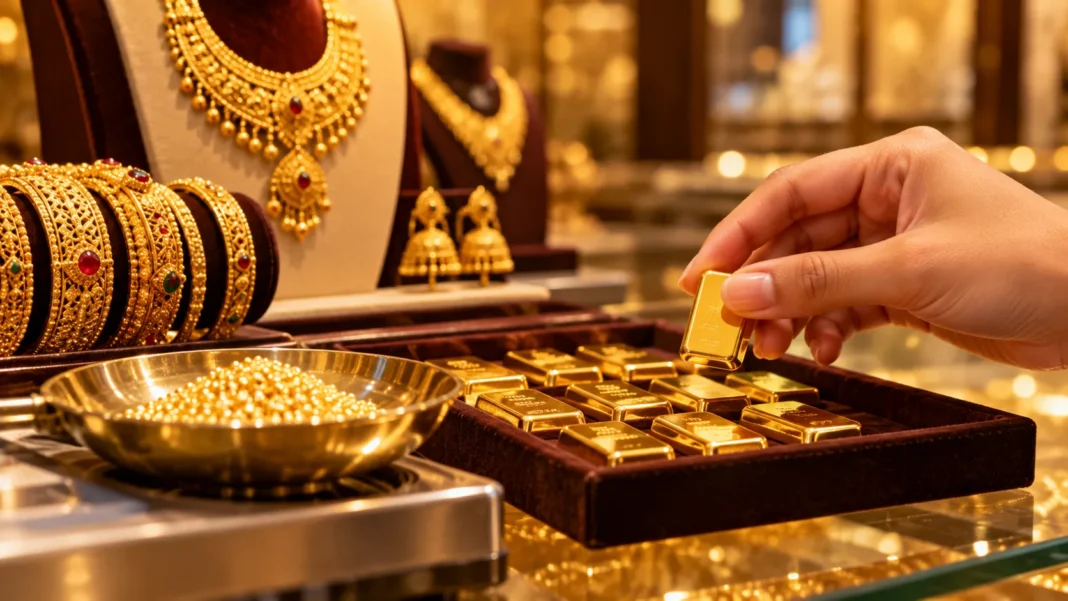

The 1 gram gold price today is an important reference for people purchasing jewellery, gold coins, and precious metals in India. Whether you are shopping for a special occasion or considering gold as a long-term investment, understanding the latest gold rates can help you make informed decisions. Gold prices change regularly because of international market movements, currency fluctuations, and domestic demand.
As of October 25, 2026, one published Indian gold-rate snapshot lists 24K gold at ₹14,269 per gram, 22K gold at ₹13,070 per gram, 18K gold at ₹10,702 per gram, and 14K gold at ₹8,319 per gram. These are indicative published rates rather than continuously updating live quotations. Actual prices may differ depending on the seller, city, taxes, and additional charges.
This guide explains the gold price today per gram in India, the differences between gold purity levels, factors affecting gold rates, and important considerations before purchasing. You will also learn how to calculate gold jewellery costs, understand hallmarking, and compare prices when buying small quantities of gold.
1 Gram Gold Price Today in India
The 1 gram gold rate in India varies depending on the purity of the metal. According to a published market snapshot for October 25, 2026, 24K gold costs approximately ₹14,269 per gram, while 22K gold costs ₹13,070. Lower-purity options such as 18K and 14K gold are generally less expensive because they contain smaller proportions of pure gold.
Gold rates are commonly displayed per gram because this unit makes it easier to calculate jewellery prices and compare purchases of different weights. Buyers can multiply the per-gram rate by the required gold weight to estimate the basic metal value. However, the final retail price may include making charges, applicable taxes, and additional expenses.
The displayed market rate should be treated as a reference rather than a guaranteed selling price. Different jewellers may provide slightly different quotations because of inventory costs, pricing policies, and local market conditions. Checking the latest rate and requesting an itemised invoice helps buyers understand the actual amount payable before completing a purchase.
Today’s Gold Rate by Karat – October 25, 2026
| Gold Purity | Price Per Gram | Price Per 10 Grams |
|---|---|---|
| 24K Gold | ₹14,269 | ₹1,42,690 |
| 22K Gold | ₹13,070 | ₹1,30,700 |
| 18K Gold | ₹10,702 | ₹1,07,020 |
| 14K Gold | ₹8,319 | ₹83,190 |
These are indicative rates from a dated Indian market snapshot. They exclude GST, making charges, and other transaction expenses.
What Is the Difference Between 24K, 22K, 18K, and 14K Gold?
Gold is classified into different karat categories based on the percentage of pure gold present in the metal. Twenty-four-karat gold is approximately 99.9% pure, making it one of the highest-purity forms commonly available. Because pure gold is relatively soft, it is often used for bullion products rather than jewellery requiring greater strength.
Twenty-two-karat gold contains approximately 91.6% pure gold, while 18K gold contains 75% pure gold. The remaining percentage consists of other metals, such as copper, silver, or other alloying materials. These additional metals can improve durability, change the colour, and make the final product suitable for different jewellery designs.
Fourteen-karat gold contains approximately 58.3% pure gold and is commonly used for jewellery where greater resistance to everyday wear is desirable. The lower gold content generally makes it less expensive per gram than higher-purity alternatives. Understanding these differences helps buyers compare products based on purity, intended use, durability, and overall cost.
24K Gold Price Today for 1 Gram
The indicative price of 24K gold in India on October 25, 2026, is ₹14,269 per gram according to the selected published rate snapshot. Twenty-four-karat gold is valued for its high purity and is commonly associated with investment-grade gold bars and coins. Its market value is closely connected to international bullion prices and domestic trading conditions.
Since 24K gold contains very little additional metal, it is comparatively soft and may not be suitable for certain detailed jewellery designs. However, it remains popular among buyers interested in holding high-purity physical gold. Investment products may carry premiums above the underlying metal rate, depending on their weight, manufacturer, and seller.
When purchasing one gram of 24K gold, buyers should confirm the product’s purity, certification, and final selling price. Small gold bars and coins can have proportionally higher premiums than larger products because of packaging and manufacturing costs. Comparing these expenses helps buyers understand how much they are paying beyond the metal’s market value.
22K Gold Price Today for 1 Gram
The indicative 22K gold price in India on October 25, 2026, is ₹13,070 per gram. This purity is particularly popular in traditional Indian jewellery, including necklaces, earrings, bangles, and wedding ornaments. Twenty-two-karat gold contains approximately 91.6% pure gold, with other metals added to provide improved strength for many wearable designs.
Because 22K gold is commonly used in jewellery manufacturing, its price is an important consideration during weddings and festivals. Buyers often compare the per-gram rate before choosing ornaments of different weights. However, intricate designs and handcrafted jewellery may carry additional making charges that significantly increase the final purchase cost.
A one-gram 22K jewellery item may therefore cost more than ₹13,070 after applicable expenses are included. Jewellers can calculate making charges using different methods, including fixed amounts or percentages of the gold value. Checking the exact net weight, purity marking, and invoice breakdown provides a clearer picture of the transaction.
18K Gold Price Today for 1 Gram
The indicative 18K gold rate in India on October 25, 2026, is ₹10,702 per gram according to the selected published price list. Eighteen-karat gold contains 75% pure gold, while the remaining portion consists of other metals. This combination offers a balance between gold content, design flexibility, and durability for certain jewellery applications.
Eighteen-karat gold is commonly used in contemporary jewellery, including rings, bracelets, and gemstone settings. Its alloy composition can provide additional strength, making it practical for designs requiring secure stone placement. The metal is also available in different colour variations, depending on the alloying materials used during manufacturing.
Although 18K gold has a lower per-gram metal value than 22K and 24K gold, finished jewellery may still be expensive. Design complexity, gemstones, brand premiums, and craftsmanship can contribute substantially to the total price. Buyers should compare the metal value and additional costs separately when evaluating different jewellery options.
14K Gold Price Today for 1 Gram
The published indicative price of 14K gold in India on October 25, 2026, is ₹8,319 per gram. Fourteen-karat gold contains approximately 58.3% pure gold, making it less pure than 18K, 22K, and 24K gold. Its higher alloy content generally increases resistance to scratching and bending compared with higher-purity gold.
Fourteen-karat gold is commonly associated with jewellery designed for frequent use, including everyday rings, necklaces, and bracelets. It may be chosen by buyers who prioritise durability and a lower underlying metal cost. However, the suitability of any jewellery piece also depends on its construction, thickness, finish, and intended use.
The lower gold content does not necessarily mean every 14K jewellery product will have a low retail price. Manufacturing costs, gemstones, branding, and other materials can increase the final amount. Buyers should verify the declared purity and compare the complete invoice rather than judging affordability solely from the advertised price per gram.
Why Does the 1 Gram Gold Price Change Daily?
Gold prices change because the metal is actively traded in international markets, where buyers and sellers respond to economic developments. Inflation expectations, interest rates, geopolitical uncertainty, and investor demand can influence gold valuations. When global bullion prices move, the change may eventually appear in the per-gram rates quoted across Indian markets.
The Indian rupee’s exchange rate against the US dollar is another important influence on domestic gold prices. International gold is generally priced in dollars, so currency movements affect the rupee cost of imported metal. A weaker rupee can make gold more expensive in India, even when international dollar-denominated prices remain relatively stable.
Domestic demand also affects gold pricing, particularly around major festivals and wedding seasons. Supply conditions, import-related costs, and local bullion market premiums can create additional price differences. These factors explain why gold rates may vary between reporting platforms, cities, and retailers, even when the underlying international market follows the same broad trend.
How to Calculate Gold Price Based on Weight and Purity
Calculating the basic value of gold begins with identifying the applicable rate per gram and multiplying it by the metal’s weight. For example, if the quoted 22K gold rate is ₹13,070 per gram, two grams would have a basic value of ₹26,140. This calculation excludes making charges, taxes, and additional expenses associated with finished jewellery.
Purity is especially important when estimating the value of gold products. A five-gram 24K gold product contains more pure gold than a five-gram 18K product, even though both have the same total weight. Buyers should therefore calculate costs using the correct purity category rather than applying the highest available gold rate to every product.
For jewellery, the calculation becomes more detailed because gemstones, clasps, manufacturing expenses, and taxes may affect the final amount. Some ornaments also contain materials that should not be included in the net gold weight. Requesting a clear weight breakdown helps ensure that the metal value is calculated appropriately and that additional costs are identified.
How GST and Making Charges Affect 1 Gram Gold Prices
The price displayed for one gram of gold usually represents the indicative metal value rather than the full retail purchase cost. Jewellery retailers may charge additional amounts for manufacturing, design, finishing, and other services. Making charges can vary depending on the jewellery type, complexity, craftsmanship, and pricing policies of the seller.
For example, consider a one-gram 22K gold jewellery item with a basic metal value of ₹13,070. If the seller applies a making charge equal to 10% of the gold value, the additional amount would be ₹1,307. This produces a subtotal of ₹14,377 before calculating any applicable taxes or other transaction expenses.
Assuming a simplified 3% GST calculation on that subtotal, the additional amount would be ₹431.31, bringing the illustrative total to ₹14,808.31. Actual invoicing and tax treatment depend on the transaction and applicable rules. Buyers should request an itemised bill rather than assuming that a published gold rate represents the complete purchase price.
How to Check Genuine Gold Before Buying
Checking gold purity is essential because the actual gold content directly affects the product’s underlying metal value. In India, the Bureau of Indian Standards provides a hallmarking system for verifying declared purity. Common markings include 22K916 for jewellery containing approximately 91.6% gold and 18K750 for products containing 75% pure gold.
Hallmarked jewellery covered by the current identification framework generally includes the BIS hallmark, a purity marking, and a Hallmark Unique Identification number. Buyers can use the relevant BIS verification service to check identification details. These checks help confirm that a product has undergone the applicable hallmarking process rather than relying entirely on verbal claims.
It is also important to obtain a proper invoice listing the jewellery description, declared purity, weight, and relevant charges. Buyers should review the product carefully and clarify any unexplained differences in weight or price. Maintaining purchase records can also make future exchanges, resale transactions, and warranty-related discussions easier to manage.
Is Buying 1 Gram of Gold a Good Investment?
Buying one gram of gold may appeal to individuals who prefer purchasing precious metals in smaller quantities. Small gold coins and bars can offer a way to acquire physical gold without committing to larger weights. However, investment value depends on the purchase premium, future market price, resale conditions, and storage considerations.
One-gram bullion products may carry proportionally higher manufacturing and packaging premiums than larger bars or coins. These additional expenses can make it harder to recover the original purchase cost when selling. Gold prices can also decline, so owning physical gold does not guarantee a positive return or protection against every financial risk.
Before purchasing gold for investment purposes, buyers should understand their financial goals and compare transaction costs carefully. Maintaining sufficient funds for essential expenses is important because gold prices can fluctuate and selling physical gold may involve delays or deductions. Evaluating purity, liquidity, authenticity, and price volatility supports more informed financial decisions.
How to Compare 1 Gram Gold Prices Across Indian Cities
Gold prices across Indian cities may differ because of local market conditions, transportation expenses, dealer premiums, and retail pricing policies. Major markets such as Mumbai, Delhi, Chennai, Hyderabad, and Bengaluru can display slightly different quotations. Even within the same city, individual jewellers may offer different final selling prices for comparable products.
When comparing rates, ensure that every quotation refers to the same purity, weight, and date. A 24K rate should not be directly compared with a 22K jewellery quotation without accounting for their different gold content. Checking whether taxes, making charges, and seller premiums are included can also prevent misleading price comparisons.
Buyers should prioritise transparent pricing and verifiable product details over minor differences in advertised rates. A seller offering a slightly lower metal price may charge higher manufacturing fees or apply different exchange conditions. Comparing the total payable amount, hallmark details, and buyback terms provides a more complete understanding of each purchase option.
Common Mistakes to Avoid When Buying 1 Gram of Gold
One common mistake is assuming that the advertised gold price includes all purchasing expenses. Retail jewellery costs often include making charges, taxes, and other product-specific amounts. Buyers who overlook these charges may underestimate the required budget, especially when purchasing small jewellery pieces with relatively high craftsmanship premiums.
Another mistake is confusing karat purity levels or assuming all gold products have the same resale value. Jewellery containing 14K or 18K gold has a different pure gold content from 22K or 24K products. Resale offers may also reflect purity testing, market conditions, dealer deductions, and the buyer’s policies.
Consumers should also avoid treating old or delayed price quotations as guaranteed live rates. Gold prices can change, and published rates may differ across providers even on the same day. Checking current quotations, confirming product authenticity, and reviewing invoice details helps buyers avoid unnecessary confusion and make more informed purchasing decisions.
Conclusion
The 1 gram gold price today provides a convenient reference for understanding the value of gold across different purity levels. On October 25, 2026, a published Indian rate snapshot lists 24K gold at ₹14,269, 22K gold at ₹13,070, 18K gold at ₹10,702, and 14K gold at ₹8,319 per gram. These amounts are indicative rather than guaranteed retail quotations.
Understanding the difference between 24K, 22K, 18K, and 14K gold helps buyers choose products suitable for their intended use. High-purity gold is commonly associated with bullion, while various gold alloys are widely used in jewellery. Making charges, GST, product design, and seller premiums can significantly affect the final amount paid.
Before purchasing one gram of gold, verify the latest quotation, compare sellers, and confirm the product’s declared purity. Requesting an itemised invoice and reviewing resale conditions can help clarify the complete cost. Staying informed about market changes and gold quality supports more careful purchasing decisions.
Frequently Asked Questions (FAQs)
What is the 1 gram gold price today in India?
On October 25, 2026, a published Indian gold-rate snapshot lists 24K gold at ₹14,269 per gram and 22K gold at ₹13,070. Prices are indicative and may vary across sellers and locations.
What is the price of 1 gram of 18K gold today?
The indicative 18K gold price in India on October 25, 2026, is ₹10,702 per gram. Actual jewellery prices may be higher after adding making charges, GST, and other applicable expenses.
Which is better for jewellery: 22K or 24K gold?
Twenty-two-karat gold is generally more practical for many traditional jewellery designs because it contains strengthening alloys. Twenty-four-karat gold is purer but softer, making it more commonly associated with high-purity coins and bars.
Does the 1 gram gold price include GST?
Published gold prices generally exclude GST and making charges unless stated otherwise. The final retail price depends on the product, transaction structure, and applicable tax rules, so buyers should request an itemised invoice.
Why is the gold price different in every city?
Gold prices may vary between cities because of dealer premiums, transportation expenses, local demand, and retail pricing policies. Buyers should compare quotations for the same purity and weight before making a purchase.